
- calendar_today August 8, 2025
Atlantic Canada—encompassing Nova Scotia, New Brunswick, Prince Edward Island, and Newfoundland and Labrador—has traditionally been viewed as a quiet corner of the Canadian housing market. But over the last few years, the region has experienced a demographic pivot. As the affordability crisis deepens in larger metros like Toronto and Vancouver, Canadians are increasingly setting their sights eastward.
The population inflow from Ontario and Alberta, spurred by remote work and lifestyle considerations, is expected to accelerate in 2025. Halifax, Moncton, and Charlottetown are emerging as remote work havens, where buyers can afford single-family homes that would be unattainable in other provinces. This eastward migration is reshaping demand, with family-sized units and waterfront properties seeing increased competition.
While home prices in Atlantic Canada surged during the pandemic years, the 2023 and 2024 markets have seen more tempered growth. Experts anticipate that this stabilization will continue into 2025. Halifax, for example, is forecast to see annual price increases of 2–4% rather than the double-digit jumps seen in recent years.
The key reason for continued upward pressure is inventory. While demand is growing, housing starts in many areas have not kept pace. New Brunswick and PEI, in particular, are facing bottlenecks in construction due to limited labor and material shortages. This supply lag will keep prices buoyant, especially in suburban and semi-rural zones where development is still catching up.
Rental Market Grows Tighter
One of the clearest signs of housing demand is rental pricing—and Atlantic Canada is feeling the squeeze. In cities like Halifax and St. John’s, vacancy rates are projected to remain below 1.5% in 2025. This crunch has made it harder for newcomers and young professionals to secure housing, even in regions once considered immune to affordability pressures.
Government intervention, in the form of rent caps and development incentives, may offer modest relief. However, rental market tightness is likely to persist through 2025. Investors are responding by converting homes into multi-unit dwellings or constructing purpose-built rental units, especially in university-adjacent neighborhoods.
Infrastructure and Development Projects in Motion
The economic outlook for Atlantic Canada is tied closely to its infrastructure pipeline. Several provincial governments are rolling out road, transit, and digital infrastructure projects, particularly in growing urban fringes. These improvements are helping to unlock new development zones in areas previously dismissed as too remote.
In Nova Scotia, for example, the expansion of rural internet access and new commuter routes into Halifax are allowing smaller towns like Elmsdale and Enfield to thrive as commuter hubs. Similar patterns are visible in New Brunswick, where cities like Dieppe and Fredericton are witnessing greater suburban sprawl.
These infrastructure-driven developments are expected to define 2025’s housing momentum, opening up secondary markets for residential expansion.
Coastal Properties Face Climate Crosswinds
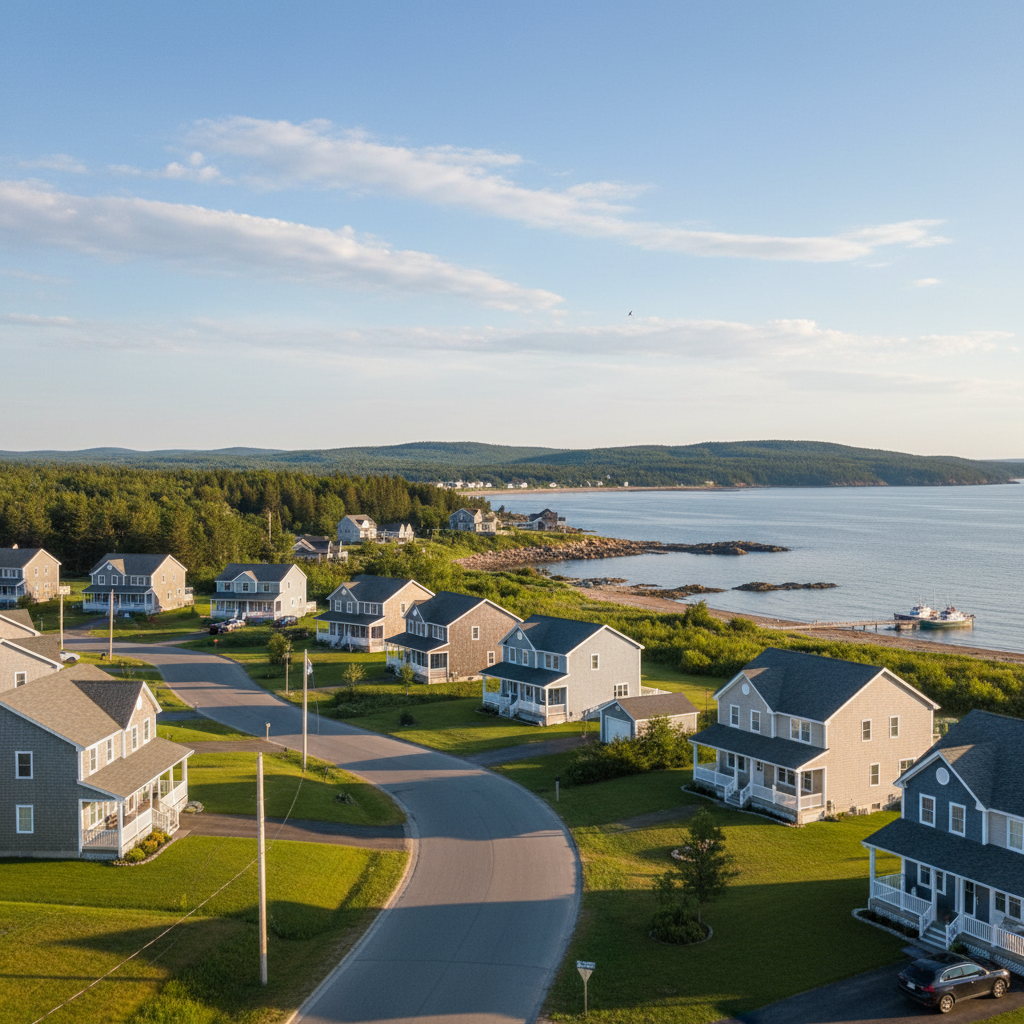
Atlantic Canada’s signature charm—its coastlines—is both an asset and a liability. Climate change, including rising sea levels and storm activity, is starting to play a role in shaping buyer behavior. In 2025, expect a sharper distinction between high-risk and low-risk coastal properties.
Waterfront homes remain in demand, particularly among retirees and second-home buyers. But buyers are increasingly scrutinizing flood maps, insurance costs, and storm resilience. Provinces like PEI and Newfoundland are now integrating climate adaptation measures into their long-term planning, which will impact where and how new homes are built.
Developers are also shifting strategy, focusing on elevated areas, resilient building materials, and setback zones to reduce exposure. These trends won’t dampen the demand for oceanfront living but will certainly shape its cost and feasibility.
Return of the Multigenerational Home
The affordability pressures facing younger Canadians—compounded by tighter lending conditions—are reviving interest in multigenerational housing. In Atlantic Canada, where larger homes are more attainable, this trend is particularly pronounced.
More families are pooling resources to purchase or renovate homes that accommodate parents, children, and even extended relatives under one roof. This model supports affordability while tapping into cultural traditions of shared living.
Builders are responding with flexible floor plans that offer in-law suites, dual kitchens, and private entrances. In 2025, multigenerational design is likely to become a standard feature in suburban subdivisions, especially in provinces like New Brunswick and Nova Scotia.
Immigration Adds to Housing Pressure
Atlantic Canada has also been a target of Canada’s immigration strategy, particularly through the Atlantic Immigration Program (AIP). As newcomers settle in greater numbers, the demand for both temporary and permanent housing is expected to rise.
Many new immigrants prefer urban hubs like Halifax or St. John’s, but over time, settlement is spreading into secondary cities and rural regions. Municipalities are adjusting by zoning more land for multifamily use, fast-tracking building permits, and seeking partnerships for affordable housing developments.
This growing diversity is contributing to neighborhood revitalization while introducing new challenges in service provision and infrastructure scalability.
Local Governments Step In
Municipal and provincial governments across the region are increasingly active in housing policy. Nova Scotia’s 2024 Housing Action Plan is laying the groundwork for incentives, fast-tracked approvals, and land release in anticipation of further population growth.
In 2025, more policy moves are expected—from tax credits for first-time buyers to cooperative housing models designed to serve rural populations. These shifts reflect a new political focus on housing as both an economic enabler and a social necessity.