
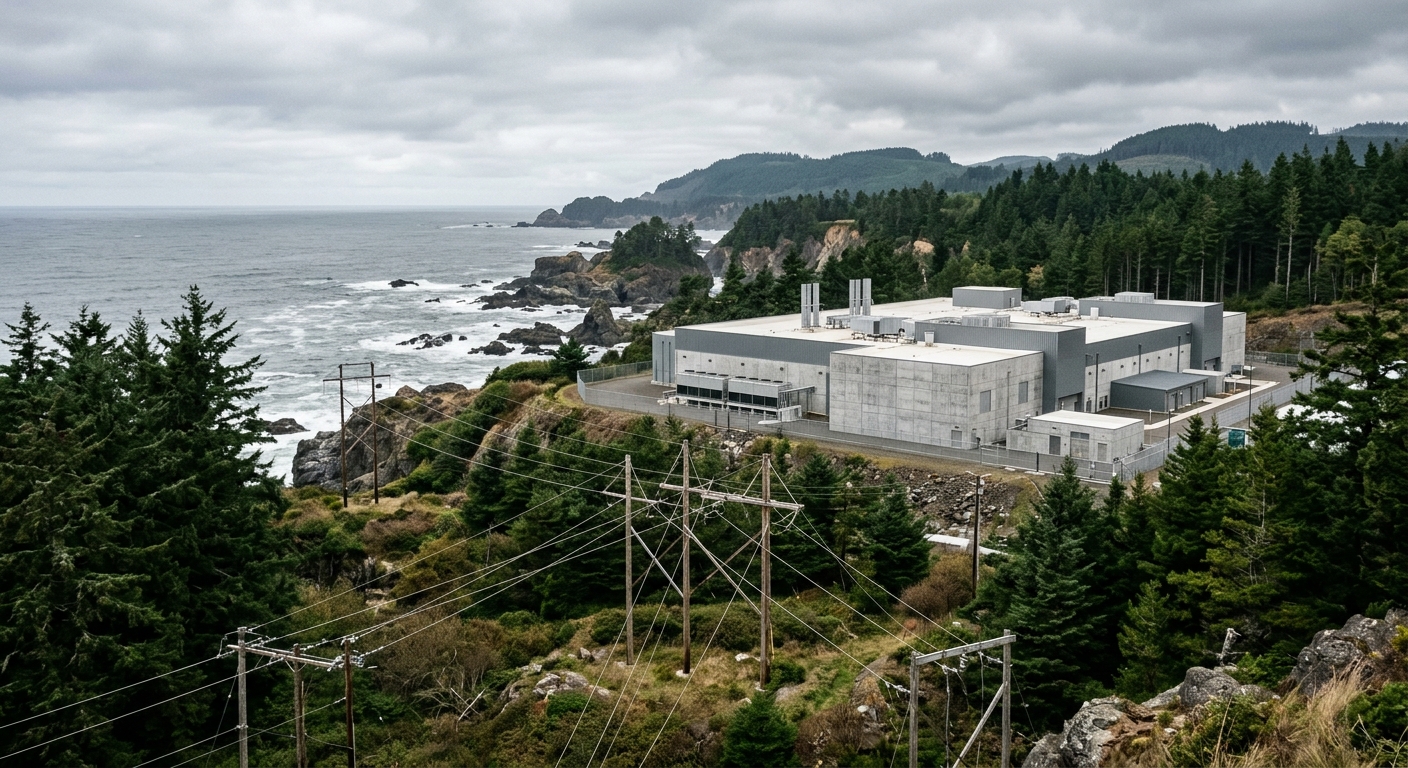
AI-generated illustration; not a photograph of the reported event.
- calendar_today October 30, 2026
Major AI Data Centre Announced for Point Tupper
EverWind Fuels has revealed plans to establish an 18,600-square-metre artificial intelligence (AI) data centre at an industrial site in Point Tupper, Nova Scotia. The $10-billion development, announced earlier this month, is anticipated to be operational by the end of 2027. The American AI company Anthropic has signed a 20-year lease for the facility, which will initially draw 95 megawatts of electricity before expanding to a total energy demand of 420 megawatts in 2028.
Residents Voice Environmental and Regulatory Concerns
Local residents, including Julissa Stewart of southern Cape Breton, have raised alarm over the rapid rollout of the project and the lack of community consultation. Stewart cited worries about environmental impacts, the absence of an environmental assessment, and the need for stronger, legally binding regulations. "We can’t just rely on a company’s word. It’s not good enough," Stewart stated, referencing apprehensions about water usage and potential risks to the local environment.
Government and Approval Processes Under Scrutiny
Nova Scotia Premier Tim Houston addressed calls for new legislation overseeing AI data centres, indicating existing guidelines and approval processes are sufficient. "Do we want to do a piece of legislation for every business that sets up in Nova Scotia? Probably not," Houston told reporters. Lora MacEachern, deputy minister of environment and climate change, also affirmed that the data centre would not undergo an environmental assessment, as such facilities are not currently listed among Nova Scotia projects automatically triggering these reviews.
Community Engagement and Opposition
EverWind Fuels acknowledged limited community engagement prior to the public announcement, attributing it to a strict non-disclosure agreement with Anthropic. The company plans to host upcoming information sessions in Richmond County. Meanwhile, a petition opposing AI data centre development in Nova Scotia has collected over 24,000 signatures, and opposition parties have echoed calls for legislation and mandatory environmental assessments. NDP Leader Claudia Chender emphasized the province’s history with industrial projects and the importance of binding regulations to avoid long-term environmental and social issues.
Commitments on Electricity and Water Use
EverWind’s chief financial officer, Matthew Tinari, told the Nova Scotia legislature committee that the company is committed to preventing residential electricity rate hikes and safeguarding local water supplies. The proposed data centre would utilize a closed-loop cooling system using recycled water, with average daily water usage estimated at 100,000 litres during the first phase, increasing to 500,000 litres after expansion. Peak water demand is estimated at 1.5% of Landrie Lake’s sustainable daily yield.
Expert Opinions on Environmental Impact and Technology
Vaibhav Bahadur, a mechanical engineering professor at the University of Texas at Austin, noted that while closed-loop cooling systems reduce water consumption, they can require more electricity and involve other environmental trade-offs. He suggested that regulations are often necessary to ensure industry responsibility, especially as Nova Scotia still relies on fossil fuels for power. Tech critic Paris Marx highlighted the industry’s recent move toward closed-loop systems to address environmental criticism, while also cautioning that companies have not fully disclosed all trade-offs involved in such cooling solutions.
Global Perspective on Data Centre Environmental Impact
A United Nations University report recently indicated the global environmental footprint of data centres rivals that of major countries and projects usage, pollution, and water consumption to double within four years as AI adoption grows.
Next Steps for the Project
Community consultation sessions in Richmond County are set to begin, as stakeholders await further details on water usage, environmental commitments, and possible government regulations for the forthcoming AI data centre.
Related coverage
Source: halifax.citynews.ca.