
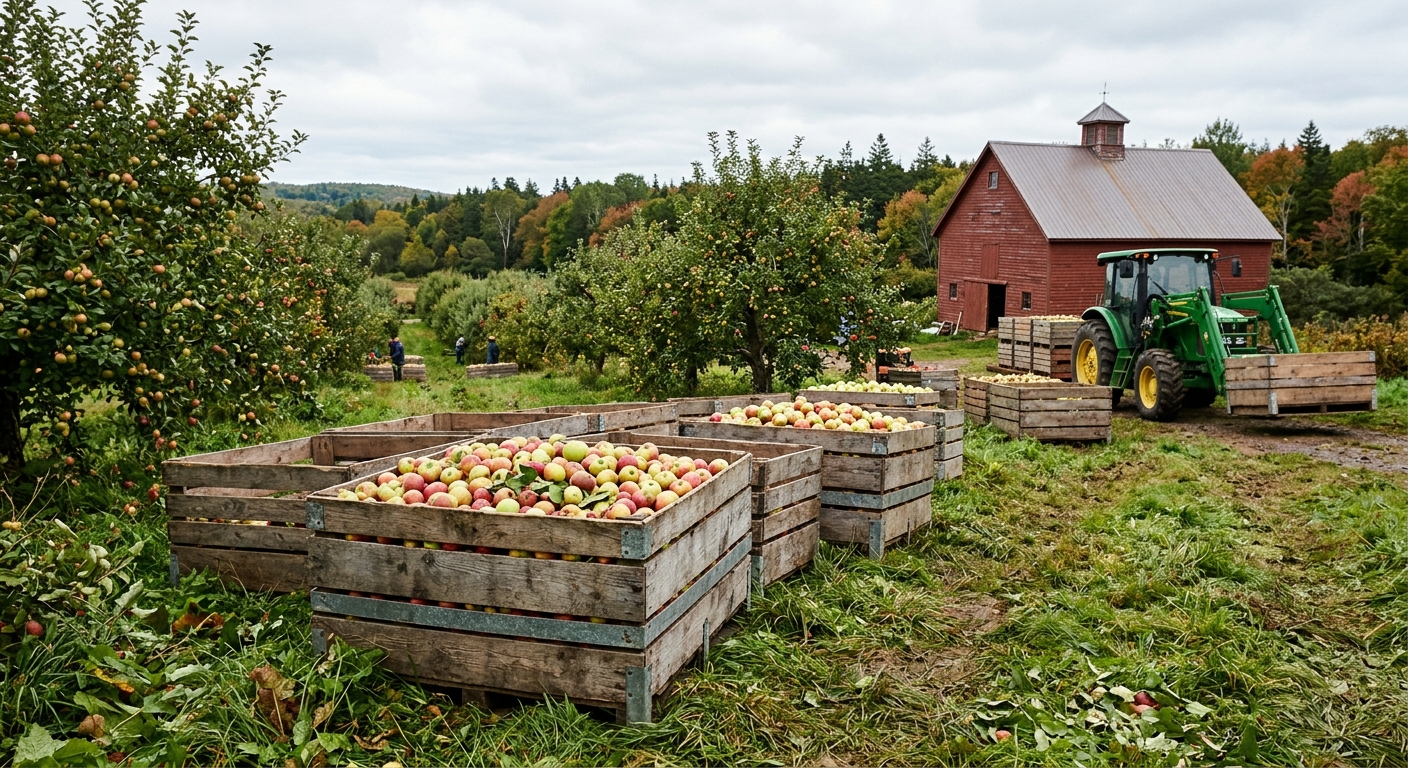
AI-generated illustration; not a photograph of the reported event.
- calendar_today November 7, 2026
Province Launches New Strategies for Agriculture Sector
On a notably warm Friday afternoon in November, New Brunswick officials introduced two major initiatives for the province's agriculture sector: the New Brunswick Agriculture Growth Action Plan and the Agriculture Climate Change Strategy. The announcements, made at Coburn Farms in Keswick Ridge, come amid changing weather patterns and economic pressures faced by local farmers.
Objectives: Economic Growth and Climate Action
Agriculture Minister Pat Finnigan introduced the plans, emphasizing their role in strengthening the industry and ensuring a sustainable future. "Together, these initiatives will help strengthen our agriculture sector, grow our economy, and build a more resilient, sustainable future for producers across the province," Finnigan stated. He highlighted the business elements of the growth plan, which aims to optimize farmland use, develop enterprises supporting producers, expand processing capabilities, and enhance domestic and international market access.
Focus on Farm Sustainability and Value-Added Production
Finnigan singled out Coburn Farms as an example of agricultural adaptation through value-added production. David Coburn, a sixth-generation farmer, shared the evolution of his orchard, which shrank in the 1990s before shifting towards processing apples into cider and apple syrup. Coburn supported increasing value-added agricultural efforts and stressed the importance of climate adaptation. He noted that drought had caused the smallest apple crop in two decades last year, while improved rainfall this summer led to one of the best harvests in 25 years. "We also have to deal with climate change and those are realities that we all have to face. Any help that we can get on that adaptation is very, very critical," Coburn said.
Targets and Funding for Emissions Reduction
The Agriculture Climate Change Strategy will track emissions reductions and help farmers address drought, soil health, and pest management. Provincial funding for the plan began with $200,000 for 2025-2026 and will increase to $2.2 million in 2026-2027, in addition to federal contributions. Finnigan clarified this was a strategic addition to existing agriculture programs, focusing on farmland and business development as well as market growth.
The strategy aims to help the sector reduce greenhouse gas emissions by 40 kilotonnes by 2030 and 60 kilotonnes by 2050. While farms currently account for about 4% of the province’s emissions, Environment and Climate Change Minister Gilles LePage described the sector as offering significant opportunities for practical solutions. Projects mentioned included improved nutrient management, adopting energy-efficient equipment, and carbon sequestration efforts.
Engaging Farmers in Climate Adaptation Efforts
LePage acknowledged climate change is bringing “more frequent extreme weather events, prolonged droughts, excessive rainfall, flooding, heat waves and changing growing conditions," which impact crop yields, livestock, infrastructure, and farm profitability. He said the department will collaborate with farmers to identify and implement emissions reduction strategies, developed in consultation with farmers and agricultural groups. "They want change, they want improvements, they want to make sure that the land is sustainable. So we are going to give them the tools to help them out and they're going to help us manage our expectations," LePage said.
Finnigan indicated strong support from progressive farmers. He stressed the importance of broad participation: "If farms don’t join in, I don’t think there’s a future." Returning to Coburn Farms as an example, he noted their proactive approach and expressed optimism the strategy will help more producers move toward long-term sustainability.
Source: cbc.ca.