
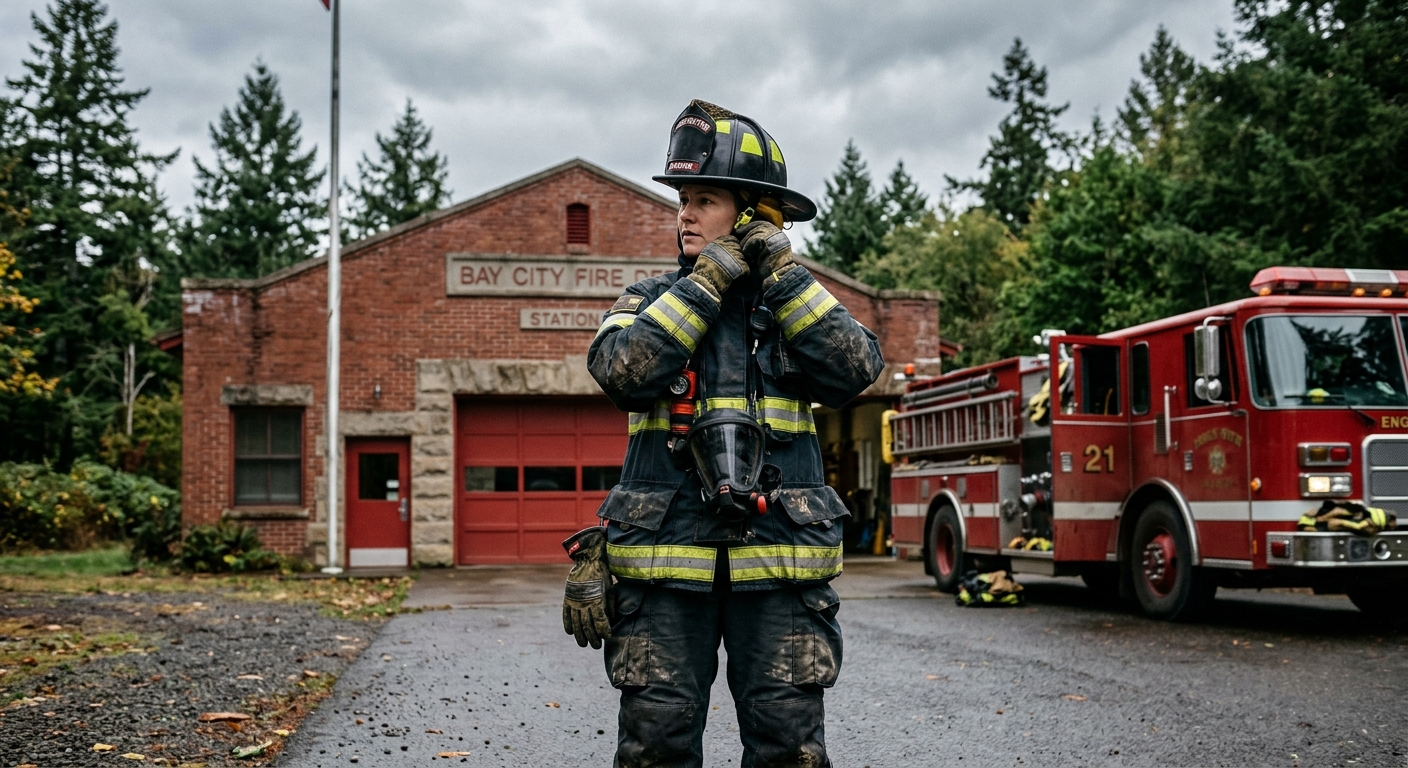
AI-generated illustration; not a photograph of the reported event.
- calendar_today November 8, 2026
Recruiting Women Remains Crucial as Volunteer Numbers Decline
When Jessica O’Dell began volunteering as a firefighter at 18 years old, she struggled with protective gear designed primarily for men. With jacket sleeves and pants too long, O’Dell initially felt less confident responding to emergency calls. Over her 17 years serving at the Hillsborough, Riverside-Albert, and Alma fire departments in New Brunswick, she has witnessed significant changes in both firefighting culture and equipment.
Protective Gear Now Designed for Women
O’Dell now finds that modern bunker gear is made to fit women specifically. While most women previously made do with male or unisex gear, she notes that manufacturers now produce boots and suits tailored to women’s anatomy. This evolution helps female firefighters perform more effectively, improving mobility and safety on the job.
Scott Poupart, past-president of the New Brunswick Association of Fire Chiefs and a volunteer captain in Bathurst, explained that although 16 to 18 per cent of New Brunswick firefighters are women, equipment procurement can still be difficult for smaller departments with limited budgets. While female-specific gear is increasingly available, some volunteers may need to wait until their departments can source and afford the right sizes and patterns. Still, efforts are ongoing to make women as comfortable and equipped as their male counterparts.
Recruitment and Retention Challenges Highlight Women's Role
Poupart emphasized the asset female firefighters bring to the field, especially given that volunteers make up roughly 85 per cent of the province’s firefighting force. Recruiting and retaining volunteers is an ongoing issue, and welcoming more women is seen as key to addressing these challenges. Poupart’s department has equal numbers of volunteer and paid female firefighters.
WorkSafeNB requires that protective gear fit properly in all dimensions, ensuring safety remains a standard for all. The Department of Natural Resources also outfits women forest firefighters with specially designed uniforms but acknowledges that sourcing such gear can be difficult due to limited inventory from manufacturers.
Building Supportive Networks for Female Firefighters
O’Dell’s professional growth was boosted after attending a Fire Service Women Ontario conference, where 200 women shared their experiences and training. While no similar umbrella organization yet exists in New Brunswick, O’Dell hopes to see one established. Tracey Shields, president of Fire Service Women Ontario and a captain with Ottawa Fire Services, described vast improvements in both policy and acceptance of women since she started her career 27 years ago.
Fire Service Women Ontario works to advocate for policies such as pregnancy and family accommodations, signaling that women are welcome in the fire service. Shields highlighted the need for visible female role models in firefighting, noting that “you can’t be it if you can’t see it.” Making departments more inclusive for everyone is vital, especially for small, rural teams facing shortages of both volunteer and paid staff.
Changing Perceptions and Inspiring New Generations
As stereotypes persist, initiatives like the Maritime Ignite Fire Academy are helping shape the next generation of firefighters. The one-week camp launched by O’Dell welcomed nine girls and 13 boys aged 14 to 16 to explore firefighting skills. O’Dell encourages young women to connect with their local departments, saying confidence will grow with experience.
Departments are increasingly adapting, with some, like Bathurst, modifying duties for pregnant firefighters to ensure their well-being. These ongoing changes aim not only to support women currently in the field but to attract more into its ranks—an important step as communities depend on dedicated volunteers for safety and emergency response.
Source: cbc.ca.