
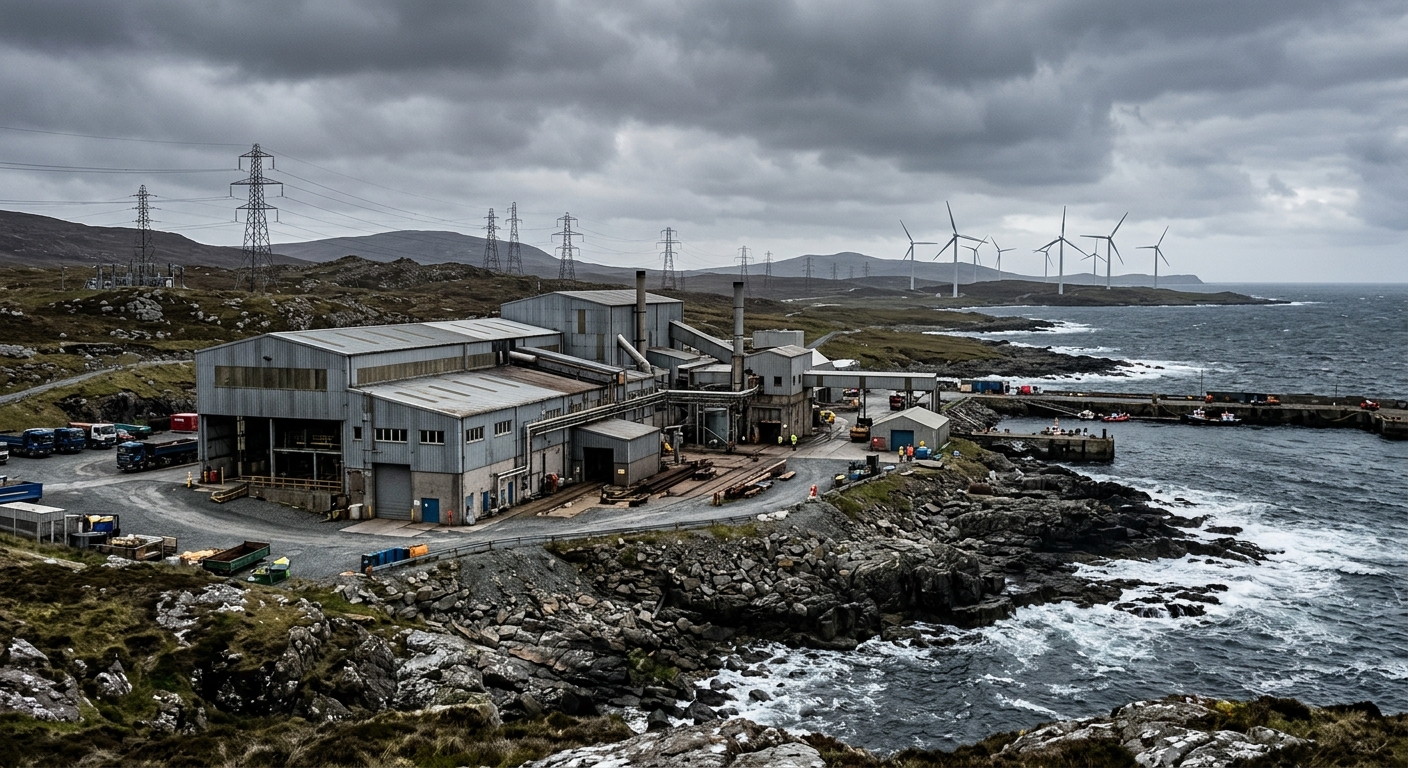
AI-generated illustration; not a photograph of the reported event.
- calendar_today October 20, 2026
Introduction
The Nova Scotia government is addressing public and political concerns following EverWind Fuels' recent announcement of a multi-billion-dollar data centre project in Point Tupper. Despite mounting questions from opposition legislators and the public, the provincial government has declined calls for an emergency session to debate the proposal in the legislature.
Details of the Proposed Data Centre Project
Last week, EverWind Fuels revealed plans to build an $8-billion data centre on its industrial land in Point Tupper. The facility is set to be leased for 20 years to artificial intelligence company Anthropic. The nova scotia data centre project will roll out in two phases. The first phase will draw power from Nova Scotia’s electrical grid, with EverWind and Anthropic pledging to finance necessary power grid upgrades. The second phase, scheduled for completion in 2028, will depend on a $2-billion development featuring four onshore wind farms. All related infrastructure, including a new substation and transmission line, received approval during the environmental assessment of EverWind’s green hydrogen and ammonia facility proposal.
Regulatory Oversight and Environmental Considerations
Environmental and industrial oversight is a central concern among critics of the data centre project. Environment Minister Tim Halman assured reporters that existing regulations under the Environment Act provide the necessary checks and balances. Halman noted that EverWind recently applied for industrial approval for diesel generators and that water use and other industrial impacts are regulated. The provincial government has a team dedicated to managing large industrial project applications, and this team will oversee the EverWind proposal.
Water Consumption Projections
The project’s water consumption has been a focal point. According to company estimates, the initial phase will use about 100,000 litres of water daily through a closed-loop water-glycol system. Upon expansion, usage could reach 500,000 litres per day. EverWind also maintains a memorandum of understanding with the Landrie Lake Water Utility related to its hydrogen project, allowing withdrawal of up to 9.5 million litres per day. Richmond County’s warden reported that studies indicate an adequate supply to accommodate the data centre’s operations.
Calls for Legislative Debate and Opposition Response
New Democratic Party (NDP) Leader Claudia Chender, alongside her caucus, is pressing Premier Tim Houston for an emergency debate on data centres. Chender argues that Nova Scotia should assert its own regulatory standards, beyond voluntary commitments from developers and non-binding federal guidelines. She voiced skepticism regarding promises from everwind fuels and anthropic ai to fund necessary power grid upgrades and called for a public debate to clarify expectations.
Liberal MLA and leadership contender Becky Druhan also supports the NDP's call, referencing her party’s previous push for further regulation before such projects are approved. In contrast, her leadership opponent, Amanda Mombourquette, initially questioned the need for more rules but suggested after seeing the project’s full scale that more binding principles should be considered, including on matters of data sovereignty and infrastructure ethics.
Government’s Position and Future Discussions
Justice Minister Scott Armstrong maintained that the government would not reconvene the legislature early, pointing out that the legislative process will allow sufficient debate when it resumes in the spring. The premier’s office echoed this position, emphasizing that regulatory decisions are made using scientific evidence and that any agreement reached with Nova Scotia Power will require approval from the provincial energy board. The government reiterated its commitment to protecting household power rates and ensuring that any new customer arrangement benefits Nova Scotia ratepayers.
Political and Community Reactions
This announcement and ensuing debate have drawn in politicians at all levels, as well as Mi’kmaw leadership. Premier Houston's statement, widely shared by Progressive Conservative MLAs, sought to counter misinformation and reassure residents about regulatory rigor and the protection of energy costs. Community leaders and officials have also engaged, particularly regarding water supply and the project's alignment with existing industrial regulations.
Conclusion
The Nova Scotia government’s response underscores ongoing scrutiny and debate over the province's approach to managing large industrial developments like the EverWind-Anthropic data centre. Regulatory frameworks, environmental impacts, and the potential benefits for energy infrastructure remain at the forefront of political and public discourse as the project advances through approval processes.
Source: cbc.ca.