
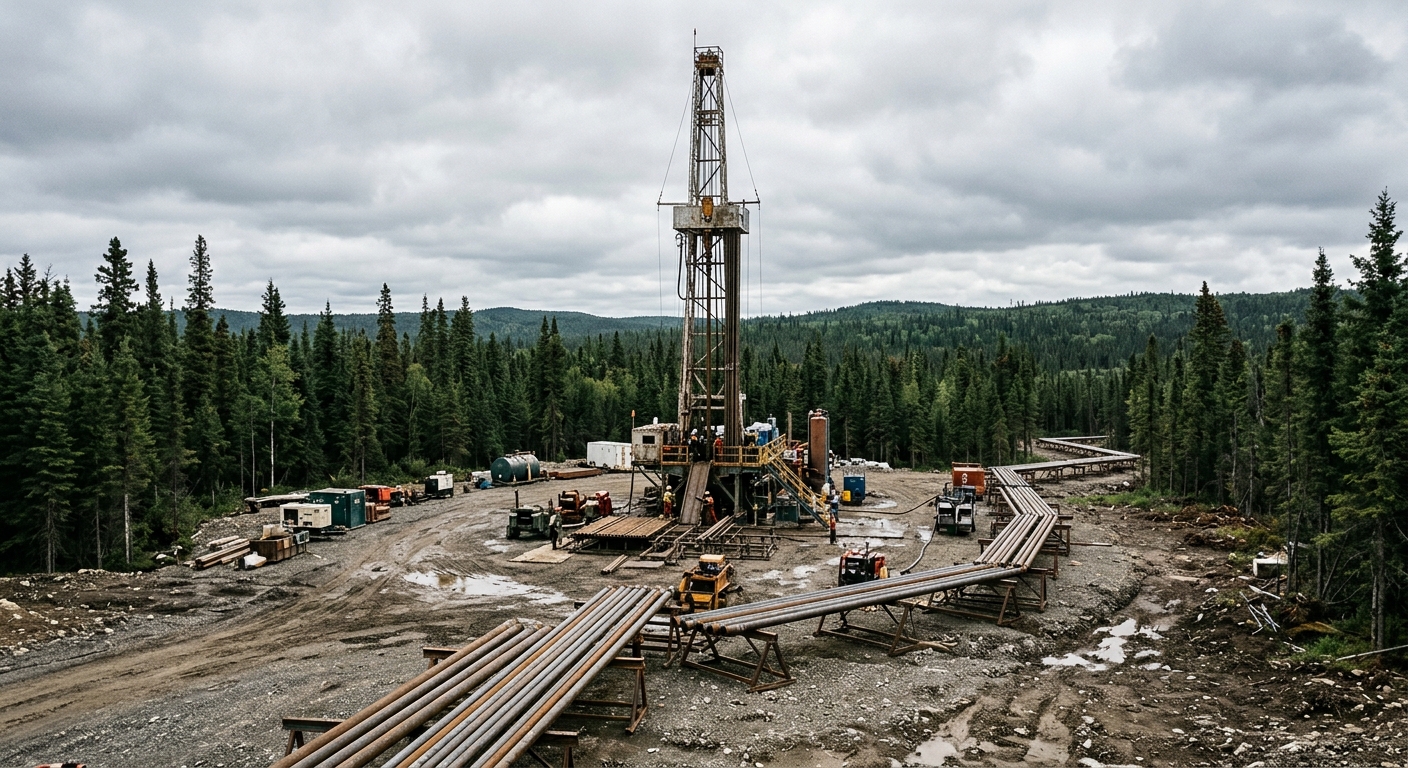
AI-generated illustration; not a photograph of the reported event.
- calendar_today October 29, 2026
Reviewing the Moratorium: Fracking Returns to the Spotlight
With New Brunswick reconsidering its moratorium on natural gas development, the debate over fracking—or hydraulic fracturing—has resurfaced. Proponents point to advances in technology and safety, while opponents cite mounting evidence of potential harm to the environment and human health.
Water Use: A Persistent and Evolving Concern
One major issue with fracking is its high demand for water. According to Jim Emberger of the New Brunswick Anti-Shale Gas Alliance, more water is now used per well, as modern techniques allow for greater underground distances to be accessed from a single site. The Canadian Association of Petroleum Producers maintains that the industry is improving water-use efficiency, highlighting increased recycling of fracking fluids.
Emeritus professor Maurice Dusseault explains that reusing fracking water can limit the amount that needs to be handled or stored, potentially lessening environmental risks associated with large volumes of wastewater.
Contamination and Environmental Impact
Concerns about contamination remain central to the fracking debate. Emberger points to cases where fracking wastewater has migrated and caused water contamination. Dusseault notes that such instances are rare and are subject to in-depth investigation to refine regulations and practices. Both experts acknowledge that some residential wells near fracking sites have been contaminated by methane, although faulty well casings, rather than hydraulic fracturing itself, are seen as the likelier culprit. Dusseault emphasizes the importance of strict guidelines for well cementing, but concedes that complete prevention of incidents may not be possible.
Health Risks and Scientific Findings
Health impacts associated with living near fracking operations have attracted growing scientific attention. Emberger references a 2025 University of Pittsburgh study that found a connection between proximity to fracking sites and increased risk of lymphoma in children. A Canadian review of studies also linked fracking exposure to respiratory and cardiovascular problems, as well as negative birth outcomes. Similarly, a 2022 University of Calgary study found higher risks of low birth weight, birth defects, and preterm birth for those living closer to fractured wells.
Dusseault says changes in the composition of fracking fluids have aimed to reduce contamination risks. Companies must disclose chemical contents to regulators and face restrictions on certain substances.
Advancements in Waterless Drilling Technology
Innovation in drilling methods is part of the latest developments. Jim Livingstone, who hopes to drill near Moncton as part of a venture between his company Innovation Energy and Pabineau First Nation, promotes a technique called 'waterless drilling.' This method, which he developed and previously tested in western Canada, uses less than 20,000 litres of water per well—compared to about 23 million litres for conventional fracking. The system employs dry air and a specialized drilling apparatus adapted from mining technologies.
While Livingstone claims success in earlier applications, verification from partnering companies could not be obtained. Not all experts agree on the necessity or suitability of waterless drilling for New Brunswick, as Dusseault believes local shale formations are compatible with conventional fracking methods.
Earthquakes and Seismic Activity
Scientific consensus has grown around the potential of fracking to induce earthquakes of significant magnitude. Provinces such as Alberta and British Columbia now employ a 'traffic light' system to manage seismic risks, requiring fracking operations to modify or halt activity in response to earthquake thresholds—such as reducing pressure at magnitude 2.0 or ceasing operations at magnitude 3.5.
Greenhouse Gas Emissions and Climate Change
Climate science developments since the fracking moratorium are critical to the debate. Emberger argues that expanded fossil fuel extraction will fuel worsening climate impacts, with global warming targets increasingly out of reach. While the petroleum industry reports reductions in methane emissions, a recent report from the Canadian Climate Institute indicates that national greenhouse gas emissions increased in 2025, partly due to higher natural gas consumption for heating and electricity.
Looking Ahead
As New Brunswick continues to review its fracking moratorium until January 2027, the evolution of science and technology will remain central to decisions about shale gas development and the environmental impact of hydraulic fracturing in the region.
Source: cbc.ca.