
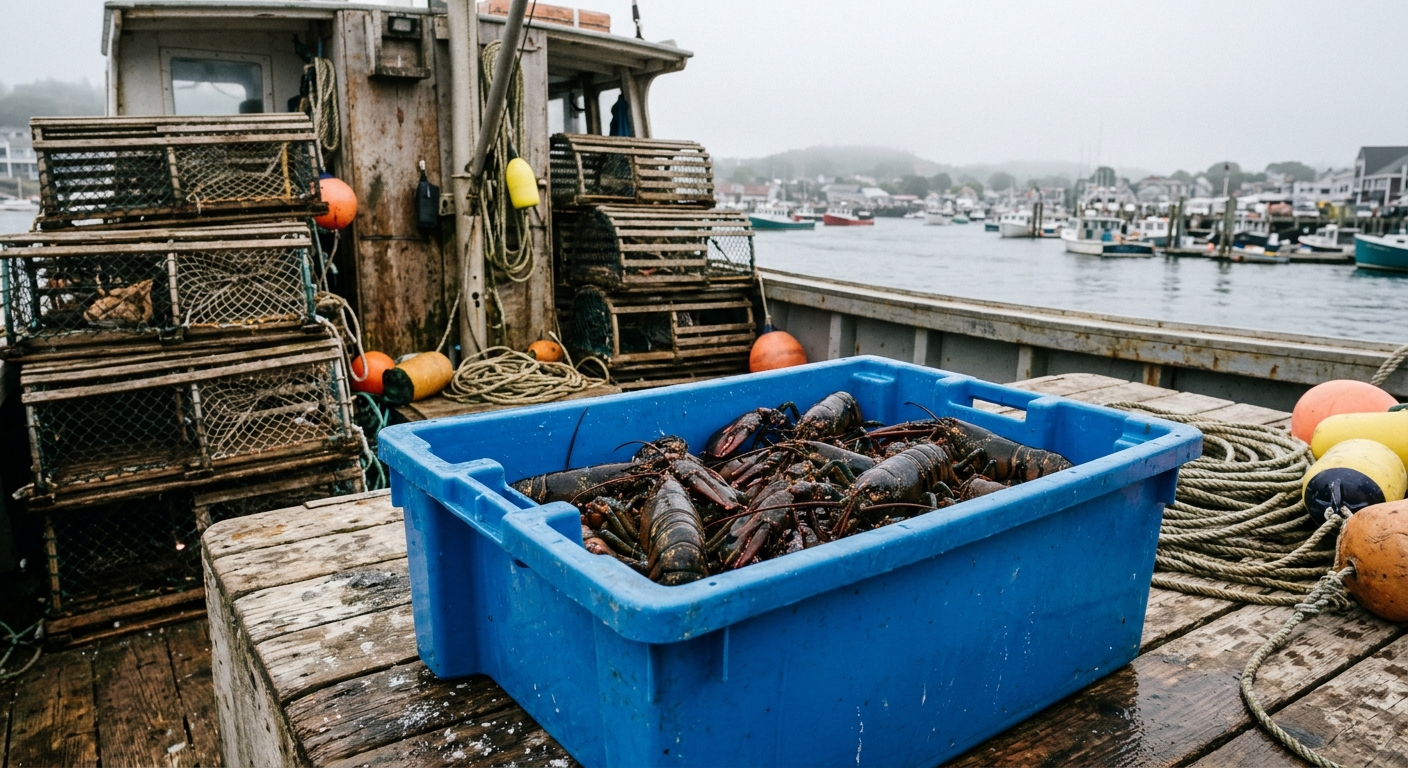
AI-generated illustration; not a photograph of the reported event.
- calendar_today November 16, 2026
Canadian Lobster Industry Grapples with Loss of Chinese Market Share
The Canadian lobster industry is strategizing ways to regain its once-dominant presence in the Chinese market, following a period where competitors—particularly Vietnam—capitalized on trade disruptions. The challenge comes as southwest Nova Scotia prepares for the new lobster fishing season at the end of the month.
Impact of Retaliatory Tariffs on Lobster Exports
China remains Canada’s second-largest market for seafood. However, as reported by Statistics Canada, lobster exports to China plunged from $521 million in 2024 to $314 million in 2025, a decline attributed primarily to Chinese retaliatory tariffs introduced in March 2025.
Kris Vascotto, executive director of the Nova Scotia Seafood Alliance, explained that these tariffs were a significant setback for Canadian exporters. Though the tariff was lifted in March 2026 and is expected to stay suspended until 2028, the industry continues to struggle to regain lost momentum.
Vietnam Emerges as a Formidable Competitor
While Canada was sidelined by tariffs in 2025, countries like Vietnam and Australia moved to fill the gap. Vietnam, in particular, became the fastest-growing competitor in the Chinese lobster market, propelled by demand for its live green spiny lobster—a product distinct for being clawless and multi-coloured. Although Vietnam’s production suffered a temporary setback due to flooding that destroyed many lobster farms in November 2025, recovery efforts have since rebuilt infrastructure and increased output.
Wild-Caught vs. Aquaculture Lobster: Canadian Strategy
Geoff Irvine, executive director of the Lobster Council of Canada, highlighted the difference between Canadian and Vietnamese lobster: Canadian lobster is wild-caught in cold waters and traceable, whereas Vietnamese lobster is primarily raised through aquaculture. Irvine sees this distinction as an advantage for Canada and suggests that targeted marketing efforts emphasizing sustainability and traceability could help win back Chinese consumers.
The Lobster Council of Canada is seeking support from the Atlantic Fisheries Fund to boost marketing efforts in China. Plans include social media campaigns, collaborations with chefs, program partnerships, and direct trade missions. In late October, Irvine and other Canadian industry representatives participated in the world’s largest seafood expo in Qingdao, China, alongside federal and provincial fisheries ministers, to further explore opportunities and understand consumer preferences.
Government Support and Market Diversification
Following the Qingdao seafood expo, Fisheries and Oceans Canada released a statement reaffirming the country’s commitment to sustainable fisheries and its reputation for supplying high-quality seafood. Nova Scotia Fisheries Minister Kent Smith’s department noted that direct interactions with buyers revealed evolving demands in China for convenient, nutritious, and sustainably sourced premium seafood – areas where Nova Scotia’s lobster industry aims to excel.
While domestic challenges like rising fuel prices add pressure to Canadian lobster fishers this season, industry leaders remain cautiously hopeful. Vascotto noted that from April to July 2026, Nova Scotia seafood exports to China rose approximately 30% over the same period the previous year, indicating signs of recovery. Nonetheless, many within the sector are also looking to diversify, eyeing expansion into other Asian and European markets to reduce dependency on China.
Outlook: A Season of Challenges and Opportunities
With competitors well-established, especially in Vietnam, and with ongoing market and cost pressures, the Canadian lobster industry faces a challenging path to reclaim its status in the Chinese market. However, with renewed marketing strategies, a focus on sustainability, and targeted outreach, industry representatives believe they can rebuild confidence among Chinese buyers and consumers. Efforts also continue to diversify export destinations, which could provide greater resilience in an unpredictable global seafood market.
Source: cbc.ca.