- calendar_today August 7, 2025
Saltwater Stories, Digital Tools – How Atlantic Canada Artists Are Exploring AI Without Losing Their Voice
Maritime Artists Are Exploring AI—But Always on Their Own Terms
In Atlantic Canada, storytelling is part of the rhythm of life. Whether it’s through fiddle tunes in Cape Breton, poetry in St. John’s, or quilts in small-town Nova Scotia, the creative voice here is steady, heartfelt, and steeped in tradition. So when AI in Atlantic Canada art began to emerge, most artists took a thoughtful pause.
A musician in Charlottetown shared, “I used AI to play around with chord progression ideas—but I’d never let it write a lyric. My songs come from lived stuff—fishing, family, heartbreak. Machines don’t know that.” That protective, grounded mindset is common across the Maritimes.
Filmmakers Are Letting AI Handle the Tedious Bits—Not the Story
From community-based documentaries in New Brunswick to creative film collectives in Halifax, the East Coast has a tight-knit film scene. Some filmmakers are using AI in storytelling to handle transcription, organize interviews, or speed up editing. But no one’s giving it the emotional reins.
A filmmaker in Newfoundland told me, “AI saved me hours in post-production, but it didn’t touch the pacing, the silences, the soul of it. That’s human work.” Maritime storytelling has always been about tone, trust, and truth. That’s something AI can’t mimic.
Visual Artists Are Testing the Waters—But Staying Anchored in Craft
Across the Atlantic provinces, painters, weavers, photographers, and digital creators are starting to use AI-assisted design tools. Most say it’s useful in the idea phase—but the finished work still needs a human hand.
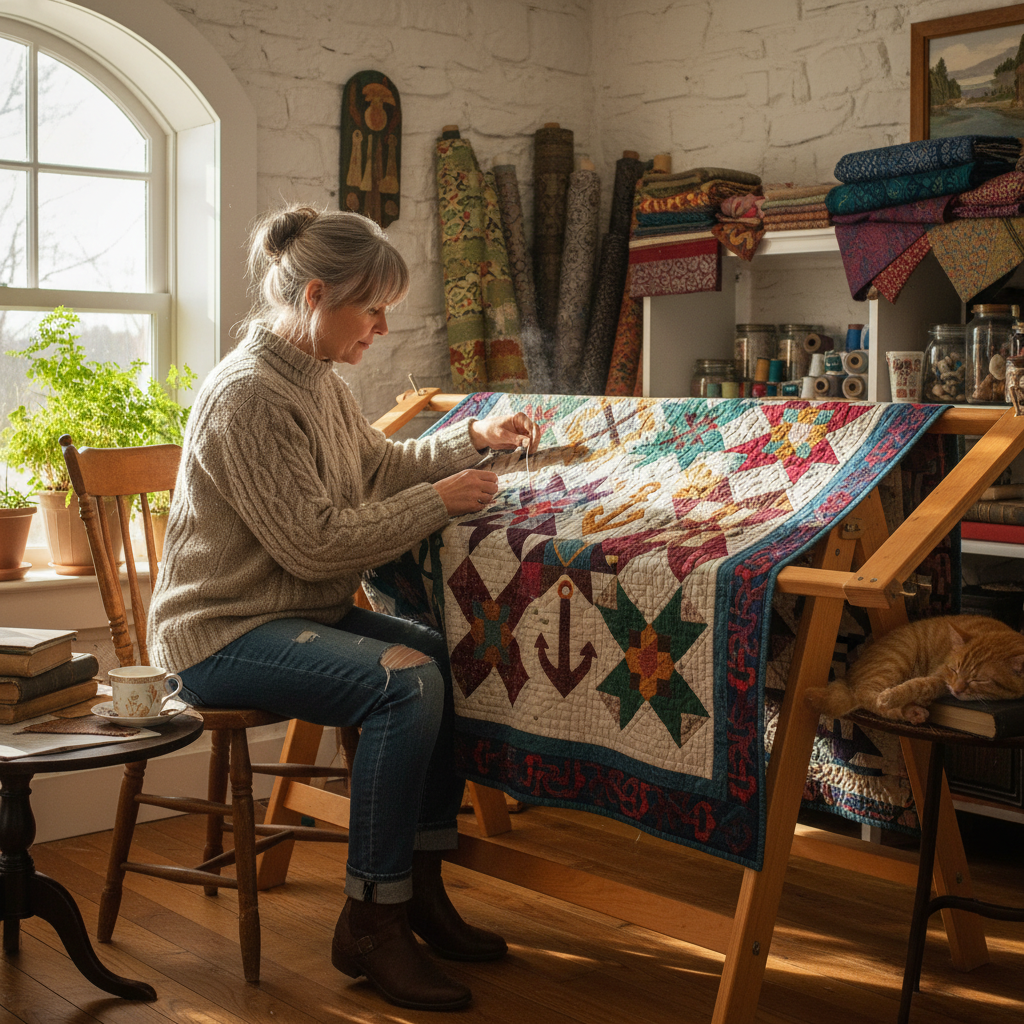
A textile artist in Lunenburg said, “I used AI to test color combinations for a new series. It was interesting, but the stitching—that’s where the story really lives. That comes from my grandmother, not a program.” In the Maritimes, art is often about connection—family, place, community. Tech can’t replace that.
Students Are Mixing Code With Story—Carefully
At NSCAD, Memorial University, and colleges across the region, students are diving into creative technology in the Maritimes, exploring AI in poetry, installation, and multimedia projects. But they’re doing it with the same sense of purpose that defines Atlantic creativity.
One student in Fredericton built an AI-powered exhibit based on weather patterns and ancestral navigation routes. “It wasn’t just about the data,” she said. “It was about what the wind means to my people. AI helped us shape it, but the meaning—that was already there.” That kind of clarity is shaping how young creators use AI: with intention, not impulse.
Plenty of Creators Are Choosing to Stay Unplugged—and That’s Understood
A lot of Atlantic artists, especially those working in oral storytelling, traditional crafts, or acoustic music, are choosing not to use AI at all. And in this part of the world, that decision isn’t questioned—it’s honored.
A fiddler in Cape Breton told me, “I don’t need software. I need silence, my bow, and maybe some salt in the air.” That speaks to the heart of the region: art here is about presence, not performance.
How Atlantic Canada Artists Are Actually Using AI
• To brainstorm early ideas – Layout, rhythm, and structure testing during pre-production
• To ease technical workload – Transcribing, organizing, or reformatting large media files
• To explore alternate directions – Offering options without replacing instinct
• Never for final storytelling – Emotional truth stays in human hands
Final Thoughts
Atlantic Canada doesn’t rush creativity. It listens to the tide, the seasons, the people. As AI tools begin to show up in creative spaces across the region, artists are experimenting—but with care.
Some are finding it helpful. Some are walking away. But in every case, they’re asking the same thing: does this still feel like my story? If not, they set it aside.
Because on the East Coast, art still comes from something deeper than code. It comes from history, heritage, and heart.