- calendar_today August 10, 2025
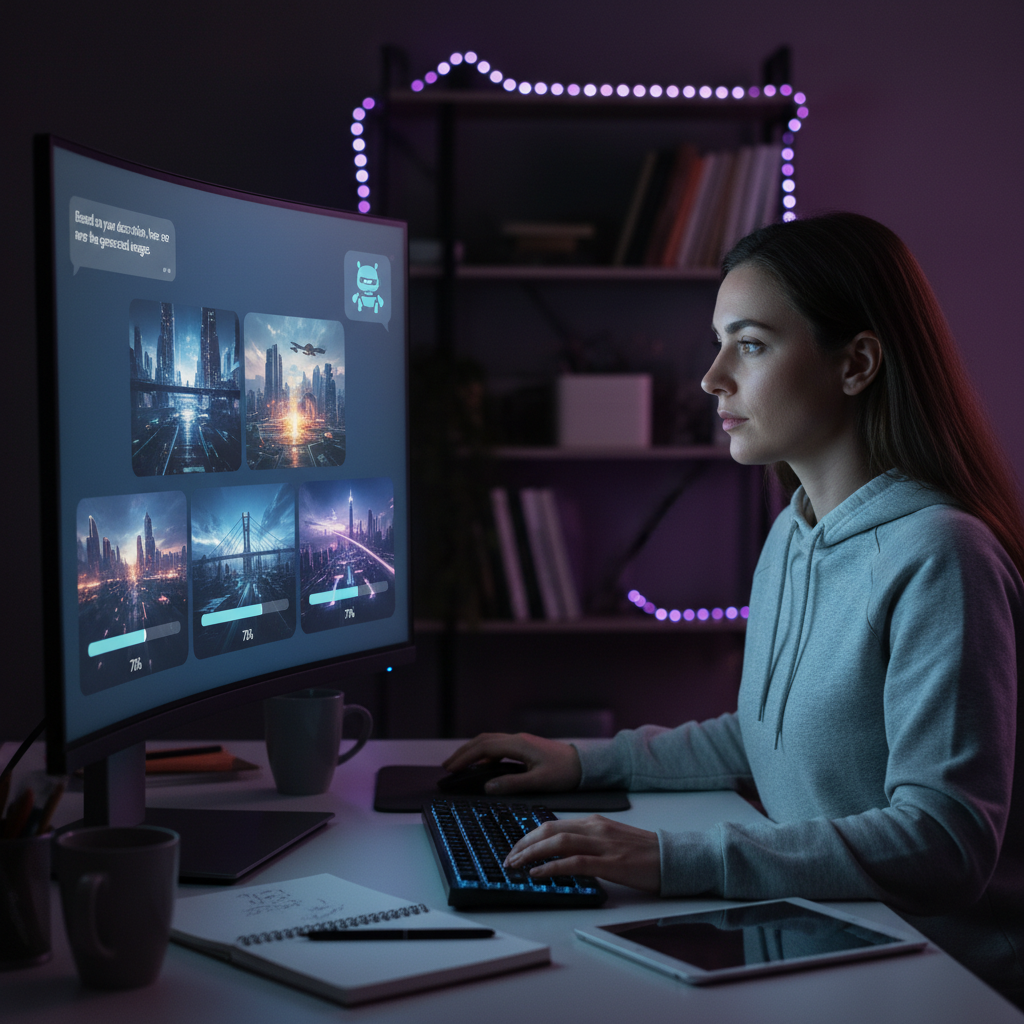
OpenAI has introduced “Images in ChatGPT,” which represents a major development by embedding image generation capabilities into the ChatGPT platform. The GPT-4o model powers a newly developed feature that lets users create images during their conversations with ChatGPT and represents a significant advancement in AI-generated content creation.
The new “Images in ChatGPT” feature now extends to all ChatGPT subscription plans, including Plus, Pro, Team, and free versions, to expand access to advanced image generation capabilities. OpenAI spokesperson Taya Christianson explained that free tier users face similar usage restrictions as DALL-E 3, with a maximum of three images per day, while acknowledging that these limits can change according to demand. Users looking for an exclusive DALL-E experience can find it through a specially designed GPT application.
The research lead of OpenAI, Gabriel Goh, identified GPT-4o as a transformative omnimodal model that processes multiple data formats such as text, images, audio, and video. The model now exhibits better “binding” ability, which solves a long-standing problem in AI image generation. GPT-4o successfully maintains distinct relationships between 15 to 20 objects without confusion of colors or shapes, unlike earlier models.
A key improvement in the system includes its advanced text rendering capabilities. AI-generated images traditionally contained text that appeared scrambled or lacked meaning. The development process required extensive iterations, which extended over numerous months to reach the desired level of perfection according to Goh. The team has achieved consistent text reliability in images, even though perfect small text rendering continues to be a difficult goal.
The system uses an autoregressive architecture rather than the diffusion models typically found in image generation technologies. The technique that produces images in a left-to-right and top-to-bottom sequence resembling text generation helps improve text rendering and binding capabilities.
The briefing presented OpenAI’s versatile system, which demonstrated capabilities like creating scientific diagrams of Newton’s prism experiment with precise labels as well as producing multi-panel comics with consistent characters and dialogue, and generating informational posters with precise text. Demonstrations of practical applications included generating transparent background images for items like stickers, restaurant menus, and logos.
ChatGPT’s multimodal product lead, Jackie Shannon, explained how the system utilizes world knowledge. When she proceeds to create an image, her personal abilities set limits, but her accumulated world knowledge aids her. The model integrates world knowledge, which enables users to receive images of Newton’s prism experiment without needing to describe the experiment first.
Despite the increased time needed for image generation, OpenAI believes improved quality and new capabilities make the wait worthwhile. According to Shannon, although there is still potential to advance latency performance, the superior image quality combined with the system’s capability and extensive world knowledge compensates for the extra waiting time.
OpenAI implemented robust safeguards to address potential misuse concerns. The system prevents watermark removal and blocks sexual deepfake generation while rejecting CSAM requests. All produced images will feature standard C2PA metadata to identify them as creations by OpenAI despite having no visual watermarks. The company uses internal tools for image verification purposes.
Shannon explained, “Our system isn’t perfect yet, but we continually enhance our protective measures and view this as the initial step.” All images produced by ChatGPT belong to the user who can utilize them according to our usage policies as they see fit.
The addition of advanced image generation capabilities to ChatGPT marks a major advancement in artificial intelligence-driven creative processes. OpenAI demonstrates its dedication to both power and responsibility through its focus on enhanced binding, improved text rendering capabilities, and stronger safeguards. OpenAI demonstrates its innovative approach to image creation by moving towards an autoregressive framework, which marks a departure from standard diffusion models. OpenAI demonstrates its dedication to transparent and ethical AI content creation through its focus on user ownership and metadata integration. This launch establishes an unmatched benchmark for powerful AI image generation that remains accessible while actively mitigating associated risks.