- calendar_today August 9, 2025
In 2025, Atlantic Canada’s housing market has lost its pandemic-era momentum. With national interest rates still elevated and affordability stretched thin, the once red-hot markets of Halifax, St. John’s, Moncton, and Charlottetown are cooling significantly. While the region hasn’t seen a full-blown crash, the deceleration is evident in falling sales volumes, price plateaus, and longer time-on-market trends across most provinces.
This housing freeze marks a shift from 2021–2022, when Atlantic Canada gained national attention for its booming demand, particularly from remote workers relocating from expensive urban centers like Toronto and Montreal. That trend has largely reversed in 2025, as inflationary pressures and economic uncertainty temper buyer enthusiasm.
Interest Rates and Borrowing Power
The single biggest contributor to the regional market freeze is borrowing cost. As of mid-2025, the Bank of Canada’s overnight rate remains above 4.75%, driving up mortgage rates that have hovered between 6% and 7% across lenders. This has particularly affected first-time homebuyers, who dominate Atlantic Canada’s residential demand pool.
In New Brunswick and Newfoundland and Labrador, where home prices remain relatively lower than the national average, interest rate hikes still impact affordability. A buyer who could previously qualify for a $300,000 home in 2022 might now qualify for only $240,000—putting preferred homes out of reach and slowing purchase activity.
Price Resistance and Seller Hesitation
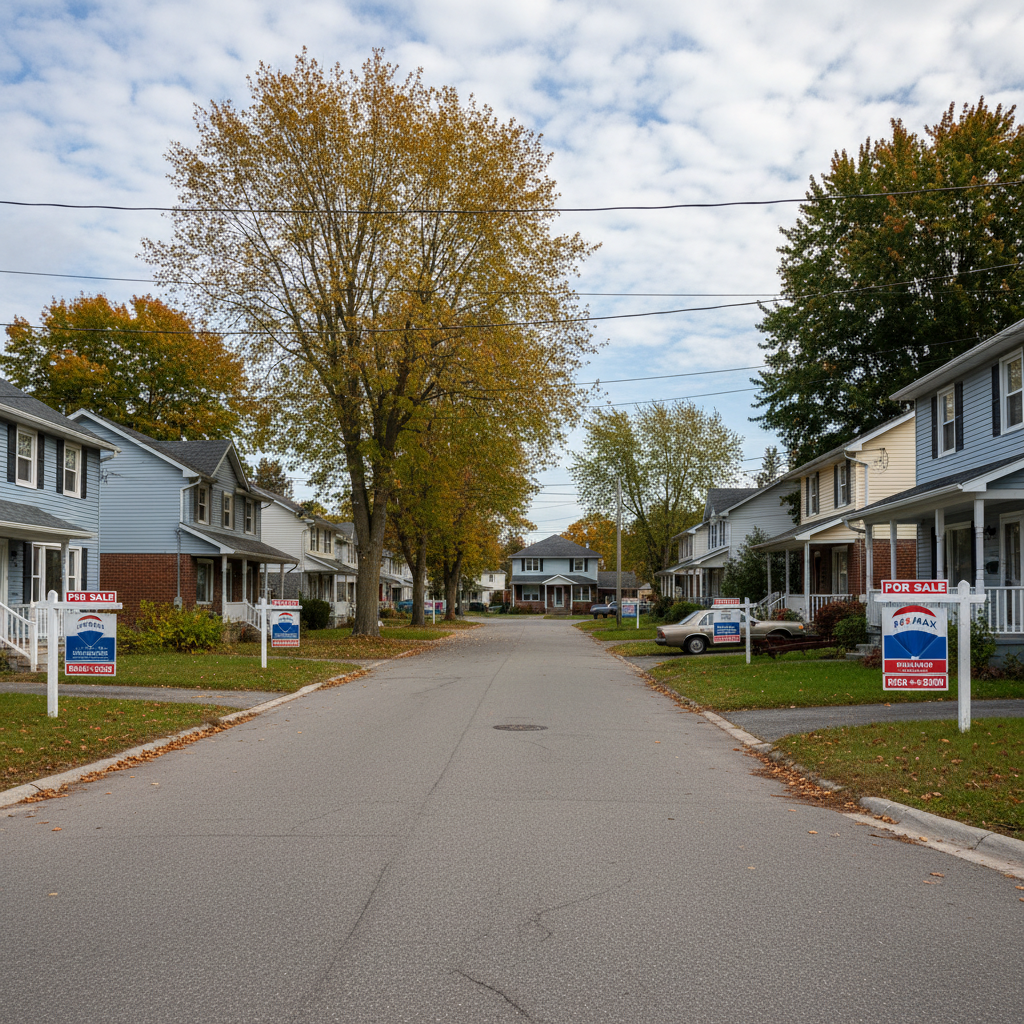
Sellers are increasingly hesitant to list their homes in 2025, especially in Nova Scotia and Prince Edward Island, where price appreciation was most dramatic during the pandemic. Many who bought at peak values are reluctant to sell into a flat or declining market, while others fear they won’t find a suitable replacement due to constrained inventory.
According to the Nova Scotia Association of Realtors, the average home in Halifax now sits on the market for over 42 days, compared to just 19 days in early 2022. Median home prices have leveled off at around $490,000—no longer surging, but still out of reach for many local buyers, particularly in rural and lower-income regions.
Urban vs. Rural Divide Widens
The market freeze is also deepening the divide between urban centers and rural communities. In urban hubs like Halifax and Moncton, sales have cooled but not collapsed, as population growth continues to support long-term demand. However, in smaller towns across Cape Breton, Miramichi, and western Newfoundland, activity has dropped sharply.
Rural areas that saw pandemic-era speculative buying now face tepid interest. Many of these regions depended on out-of-province buyers, who are now either priced out due to mortgage rate hikes or hesitant due to economic uncertainty. As a result, some rural properties are sitting unsold for months, forcing price adjustments and stalled development projects.
Economic Uncertainty and Outmigration
Atlantic Canada’s broader economic conditions also play a role. Unemployment rates remain above the national average, particularly in Newfoundland and Labrador, which continues to wrestle with demographic decline and limited industrial diversification.
Nova Scotia and New Brunswick have seen modest gains in tech and service-sector jobs, but wage growth has failed to keep pace with inflation, leading many young professionals to consider relocating to central or western provinces in search of better-paying jobs and affordable housing.
This interprovincial migration trend, once a tailwind for Atlantic real estate, has become a headwind in 2025. Fewer newcomers mean fewer buyers—and more pressure on already-softening prices.
Rental Markets Strain Amid Ownership Barriers
As purchasing power wanes, demand for rental housing has surged across the region. In Charlottetown and Halifax, vacancy rates have dropped below 1%, pushing average rents to record highs. In Halifax, the average rent for a two-bedroom apartment is now over $1,750, representing a 12% year-over-year increase.
However, new rental supply has been slow to materialize due to rising construction costs, labor shortages, and permitting delays. Developers in St. John’s and Fredericton cite tight lending conditions and soft presale demand as barriers to launching new builds. This lack of supply further discourages mobility within the housing ecosystem.
Government Response: Too Little, Too Late?
In response to affordability concerns, provincial governments across Atlantic Canada have rolled out targeted measures—such as rent control policies in Prince Edward Island and first-time homebuyer programs in Nova Scotia. However, these initiatives have done little to address the underlying issue: high borrowing costs and stagnant local incomes.
Some municipalities, including Moncton and Halifax, have eased zoning restrictions to encourage density and infill development. Still, it may take years before these policies translate into meaningful inventory expansion—especially with current market hesitancy from developers.
Outlook for the Remainder of 2025
Most analysts agree that a full housing recovery in Atlantic Canada is unlikely until the Bank of Canada begins to cut interest rates—something not expected until early to mid-2026. In the meantime, markets across the region will likely remain frozen, with occasional bursts of activity tied to seasonal demand and modest price adjustments.
For buyers, this offers potential opportunities to negotiate better terms in a slower market. But for sellers, especially those who purchased at peak pricing or rely on home equity for retirement plans, the current environment remains challenging.
Final Takeaway
The 2025 housing freeze in Atlantic Canada isn’t a crash—but it is a marked cooling period after several years of strong performance. With economic headwinds, affordability constraints, and population pressures all converging, the region’s real estate market is recalibrating. How long this freeze lasts will depend on national monetary policy and regional resilience in the face of demographic and economic transition.
Whether you’re in bustling Halifax or rural western Newfoundland, the message is clear: patience will be key in navigating this cooler real estate climate.