
- calendar_today August 7, 2025
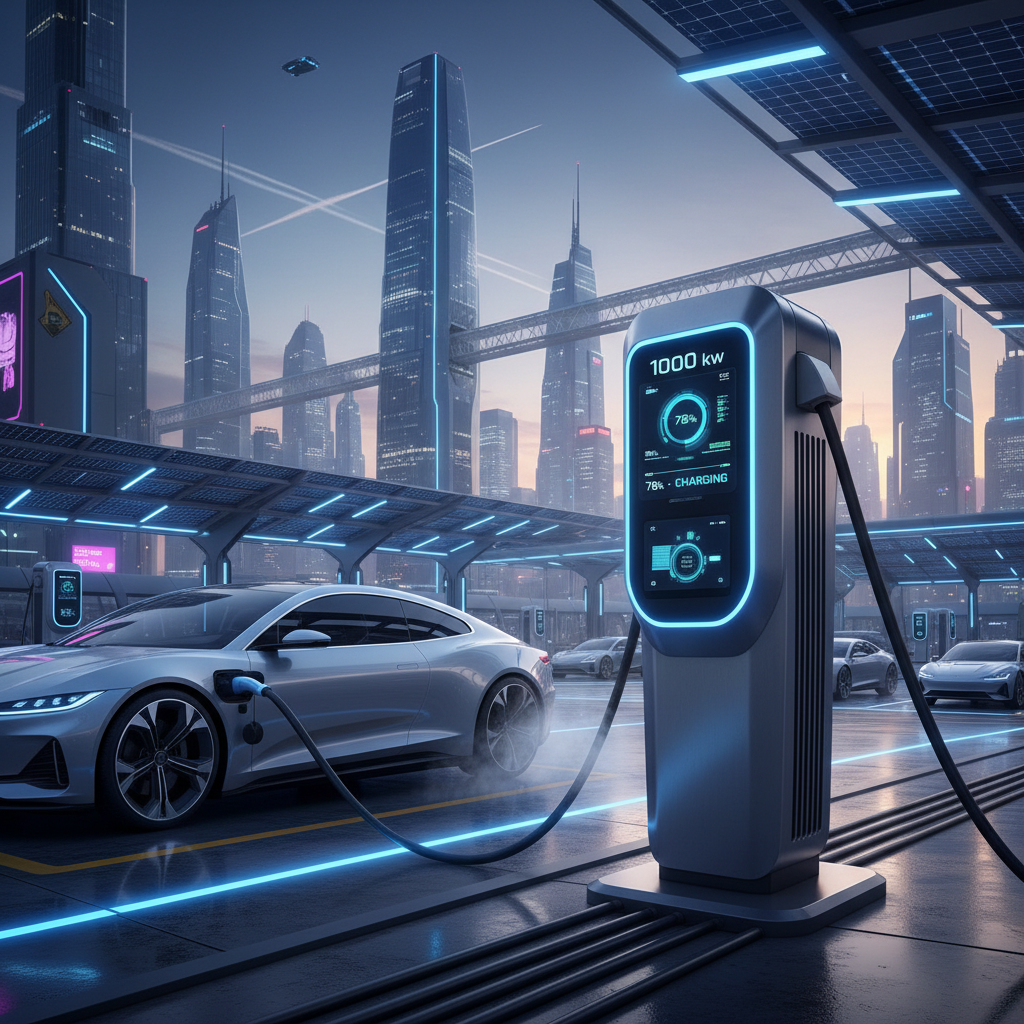
The electric vehicle (EV) industry will experiencing a major transformation when BYD, China’s leading automotive company which recently overtook Tesla in global EV sales, introduces its cutting-edge “super e-platform.” The new system with 10C charging capabilities plus 1,000 kW DC chargers targets significant EV charging time reductions to approximate the convenience of typical gasoline refueling. The company’s central innovation enables users to gain 249 miles (400 km) of range in just five minutes which significantly outperforms current industry benchmarks. Tesla Superchargers reach a maximum output of 250 kW while Electrify America chargers deliver up to 350 kW and Formula E’s top chargers operate at 600 kW.
BYD’s 10C Charging: A Five-Minute Revolution in EV Refueling
BYD chairperson Wang Chuanfu expressed that their primary objective is to achieve EV charging speeds equivalent to gasoline car refueling. The “super e-platform” battery technology achieves 10C charging capabilities that enable full battery capacity restoration within 6 minutes under perfect circumstances. Together with 1,000 kW DC chargers this technology enables quick power transfer which shortens charging periods. The company BYD intends to install more than 4,000 megawatt chargers throughout China to support its recently introduced electric vehicles such as the Han L sedan and the Tang L SUV.
The worldwide market landscape manifests intricate characteristics. BYD maintains a growing market presence worldwide with strong performances in Europe yet encounters substantial political barriers when entering the US market. Congressional members from across the political spectrum have raised national security and economic competition concerns which has resulted in attempts to limit Chinese EV companies from entering the US market. The difference between range estimation standards must be recognized as fundamental. The 249-mile range number provided by BYD comes from the CLTC standard which is more generous than the EPA standard applied for US evaluations. The realistic range that vehicles can achieve under EPA testing conditions would probably show reduced mileage.
U.S. automakers have a feasible option to acquire BYD’s pioneering technology through licensing rights even though they face current challenges. Licensing arrangements between U.S. automakers and technology innovators can expedite faster charging adoption which helps navigate political roadblocks while extending rapid charging advantages to more consumers. The actual performance of this technology depends on multiple elements such as battery temperature, current state of charge and the quality of the charging infrastructure. When it comes to electric vehicles, how well energy turns into driving distance depends on vehicle efficiency which is expressed in kilometers per kilowatt-hour (km/kWh).
The “super e-platform” developed by BYD represents a critical technological breakthrough in electric vehicle charging infrastructure which aims to resolve the major adoption challenge of extended charging periods. By building an extensive charging network throughout China the company enhances its global EV market leadership while simultaneously laying the foundation for the transformation of electric transportation. Through technology improvement and infrastructure growth BYD is leading a transformative era where electric vehicle charging will match the speed and ease of gasoline refueling.
The adoption of rapid-charging technology across the industry will encourage automakers to compete more fiercely and expedite advancements in their respective EV platforms. The competition in technological advancement promises to create more efficient batteries and expand vehicle range while making fast-charging networks more available globally. The adoption of quicker EV charging technology from companies like BYD would present benefits to consumers while simultaneously supporting the growth of a sustainable transportation network as countries strive to cut carbon emissions. Licensing agreements create opportunities for widespread adoption of electric vehicles which can transform global travel into a more sustainable option.