
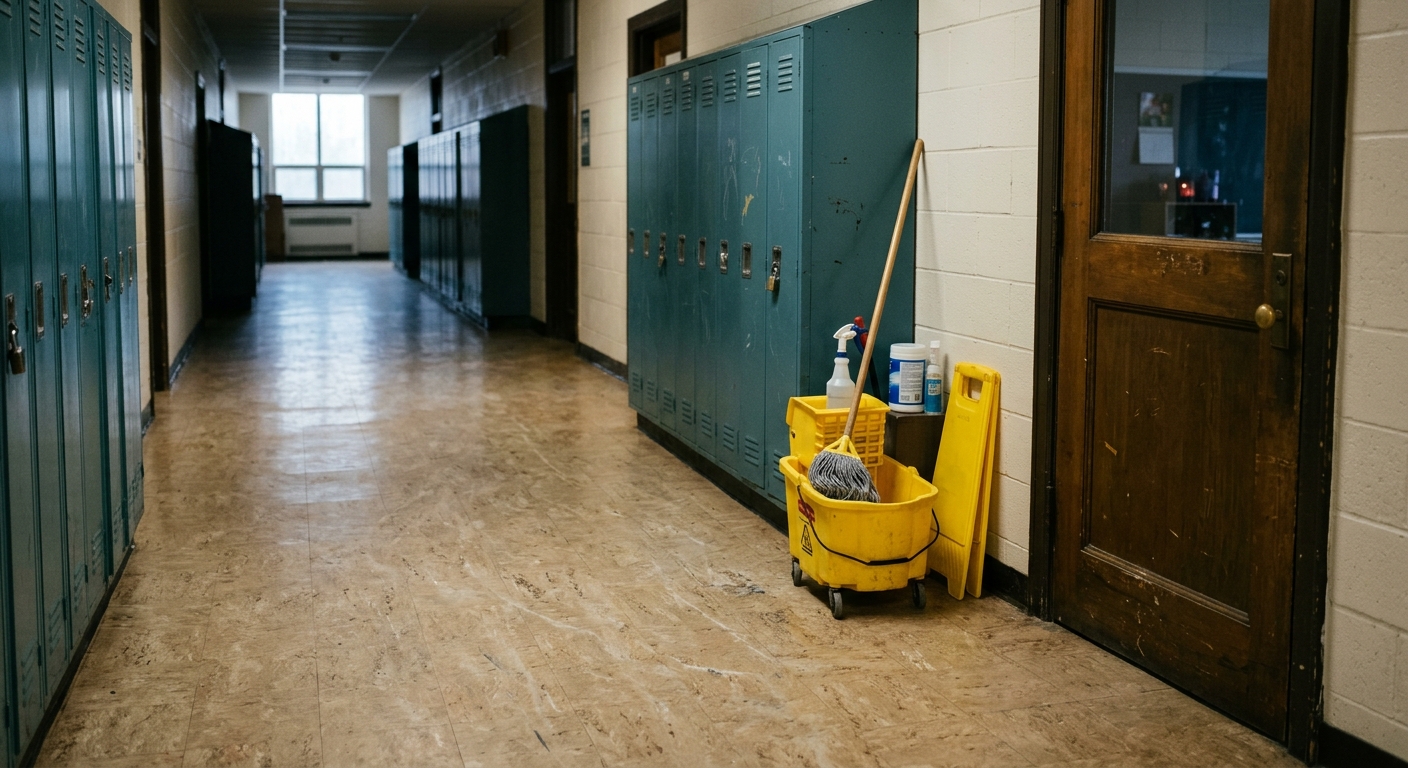
AI-generated illustration; not a photograph of the reported event.
- calendar_today November 18, 2026
School Support Workers Vote Down Tentative Agreement
The union representing over 5,500 school support workers in Nova Scotia has announced that its members have rejected a proposed contract, citing concerns about the timing of wage increases. The Canadian Union of Public Employees (CUPE) stated that the workers would have had to wait too long to see significant pay improvements.
Key Reasons for Rejection: 'Rear End Loaded' Wage Increases
Nelson Scott, president of CUPE Local 5050 in Cape Breton and chair of the Nova Scotia School Board Council of Unions, explained that the contract was structured in a way that delayed meaningful wage hikes. “The money was all rear end loaded, we call it,” said Scott. According to him, members would only receive their full raises at the end of a four-year period. He noted that, while the union was able to secure the $3.50 per hour raise it had been seeking, the initial increases in the first two years of the contract were minimal, which dissatisfied members.
Scope of Workers and Pressing Issues
The school support staff represented by CUPE includes teacher assistants, early childhood educators, inclusive education staff, custodians, and bus drivers. Scott emphasized that escalating living costs have made timely wage increases critical for these workers. “They want the money now. They find it very hard when we're struggling in today's economy to try to make ends meet,” he said.
In addition to wage concerns, Scott highlighted workplace safety and staffing levels as important topics that members sought to address through bargaining. He did not disclose the exact results of the ratification vote but reported that the sentiment was consistent across all eight CUPE locals in the province.
Union’s Stance on Potential Strike Action
Following the rejection of the deal, CUPE resumes its position with the legal right to strike. Despite this, Scott conveyed the union’s preference to avoid job action and its intention to resume negotiations with the province. “We understand the hardship that's going to put parents and students in and we don't want to disrupt. But if we have no other choice, then the outcome is what it is,” Scott said.
The effect of a school support worker strike would vary by region in Nova Scotia. For example, a strike in the Cape Breton-Victoria and Strait regions would result in all schools closing, with students moving to online and at-home learning. In other regions, the impact would differ, with some grades remaining in school and others shifting to at-home or online classes. Effects on school busing would also depend on the region.
Next Steps and Government Response
Scott said CUPE would not issue a strike notice on the day of the announcement and is prioritizing discussions with members about future actions. The union is required to provide 24-hour notice ahead of any strike action.
After the tentative contract was turned down, the Nova Scotia government posted an update on its website affirming that it, the regional education centres, and the French-language school board Conseil scolaire acadien provincial are continuing their efforts to reach renewed agreements. The notice assured that regular school operations will persist until further notice and that contingency plans are ready if a strike occurs.
About the Author
Gareth Hampshire reports for CBC News from Halifax.
Related coverage
Source: cbc.ca.