
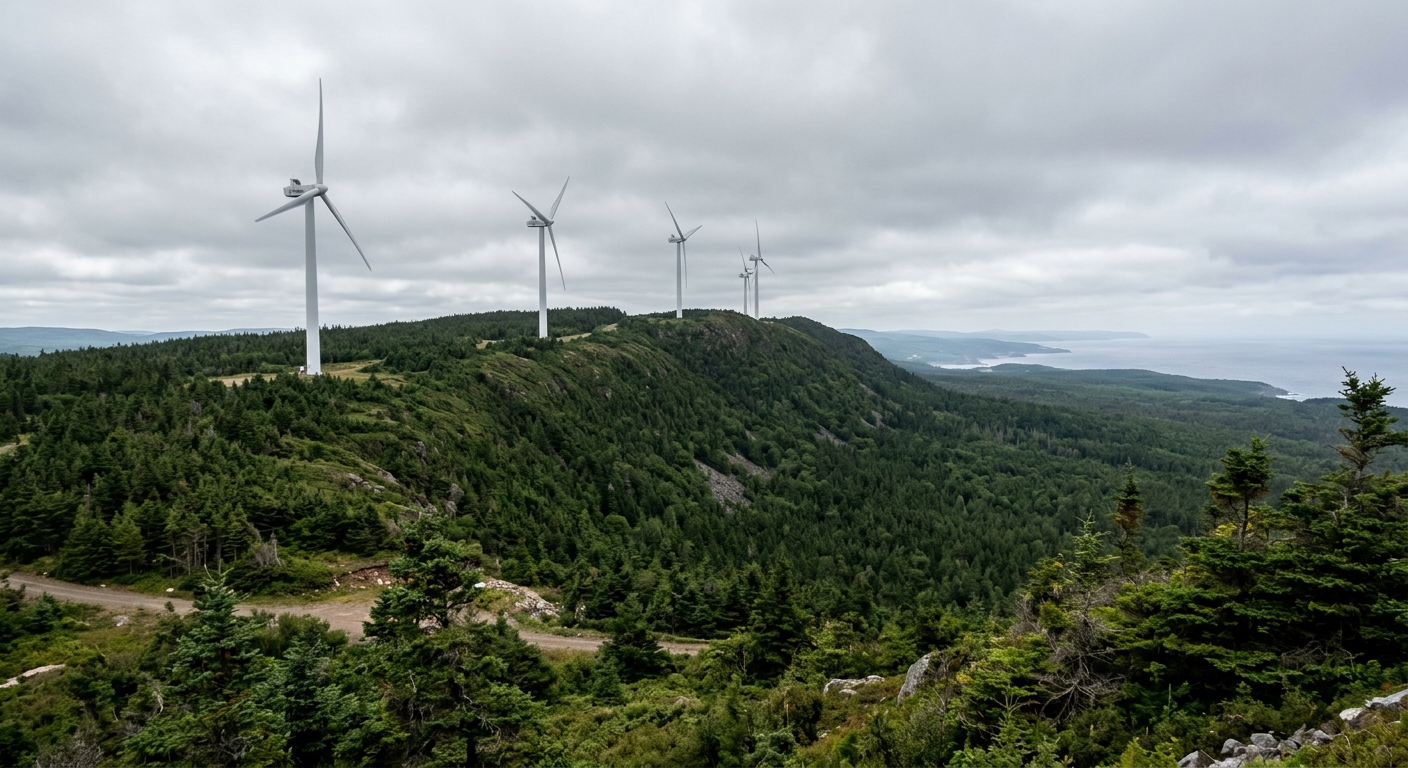
AI-generated illustration; not a photograph of the reported event.
- calendar_today November 17, 2026
Auditor General Highlights Weaknesses in Wind Project Oversight
Nova Scotia’s Auditor General, Kim Adair, has called on the province’s Environment Department to strengthen its environmental assessment process for onshore wind energy developments. In her latest audit, Adair raised concerns about post-approval monitoring and overall oversight, which she deems crucial as the province pursues ambitious renewable energy targets for 2030.
Key Findings from the Auditor General’s Report
The audit found that while Nova Scotia’s environmental assessment process generally aligns with those in other Canadian provinces, significant weaknesses exist in the way projects are monitored after receiving approval. Adair noted that the Environment Department does not consistently ensure that projects remain compliant with terms designed to manage environmental risk.
Recommendations to Improve Assessment and Compliance
The report sets out 13 recommendations designed to address these issues. One key suggestion calls for strengthening the terms and conditions applied to environmental assessments by introducing measurable criteria and clearly defined timelines. Another recommendation highlights the need to verify the qualifications of external consultants involved in the assessment process.
Importance of Effective Oversight for Renewable Energy
Adair underscored the importance of effective environmental oversight, especially as Nova Scotia advances onshore wind energy initiatives to help reach its renewable energy targets by 2030. She stressed that robust compliance monitoring ensures projects meet both the province’s climate goals and its environmental protection standards.
Department Response and Next Steps
The Environment Department has agreed to implement all 13 recommendations outlined by the auditor general. Going forward, the department will focus on addressing the identified gaps in post-approval monitoring, assessment terms, and consultant qualifications to strengthen the overall assessment process for wind energy projects in the province.
Conclusion
The Auditor General’s report emphasizes that improvement in oversight and compliance monitoring is essential as Nova Scotia relies increasingly on onshore wind energy to meet its future energy needs sustainably and responsibly.
Related coverage
Source: cbc.ca.