
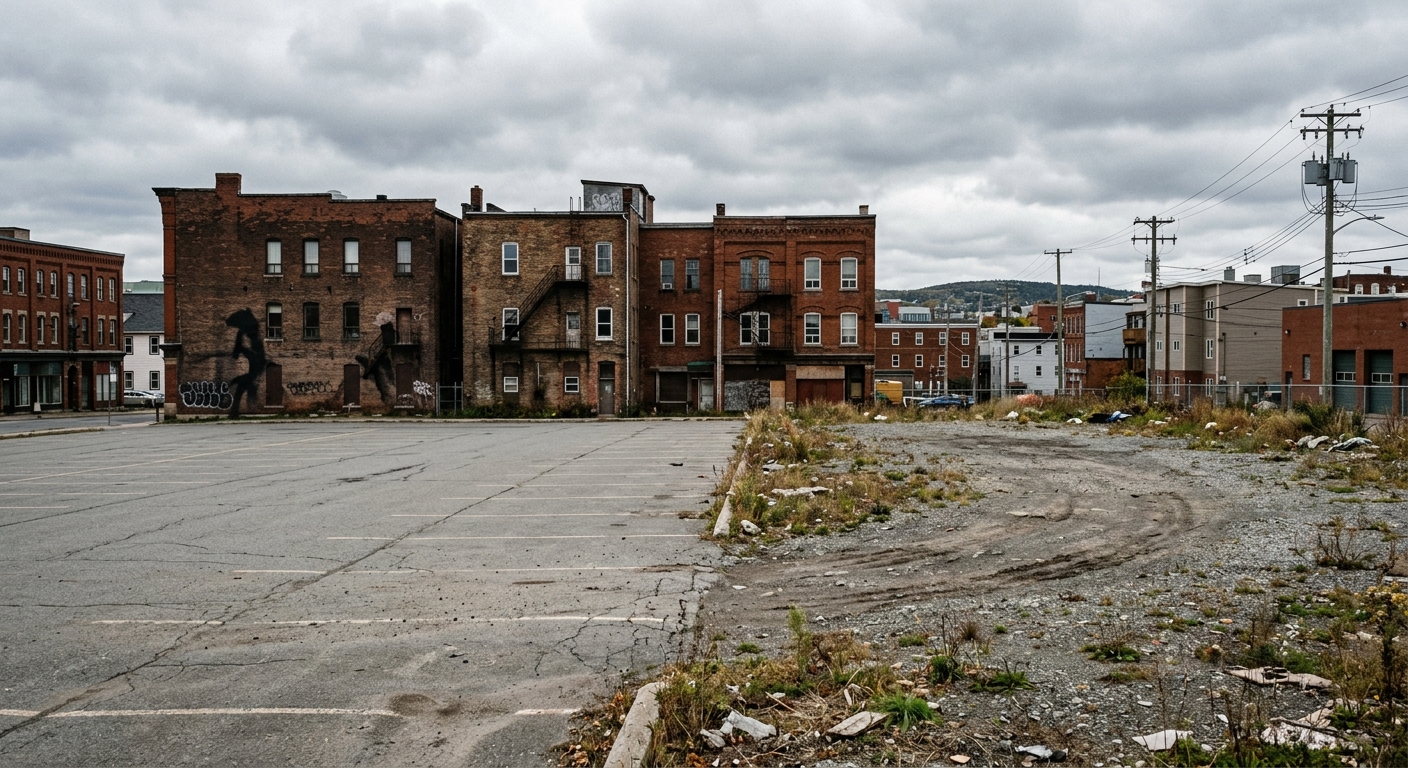
AI-generated illustration; not a photograph of the reported event.
- calendar_today November 17, 2026
Moncton Prepares for Potential Vacant Land Tax
Moncton city officials have announced their intention to consider implementing a vacant land and property tax, provided that upcoming provincial legislation grants municipalities such authority. The move aims to address concerns over underutilized properties and promote housing development within the city.
Provincial Legislation Proposed
Earlier this month, the New Brunswick legislature introduced Bill 14, a bill designed to let municipalities set tax rates for "unoccupied or unused real property, including buildings and premises." The legislation has passed second reading but has not yet been enacted. More precise details are expected to emerge following the passage of the bill, both in terms of provincial regulations and municipal bylaws.
City Officials Support Vacant Property Tax
Support for the proposal has come from both Moncton’s mayor, Shawn Crossman, and Ward 2 Councillor Marc Léger. Léger, who referenced the vacant property tax during a public presentation focused on crime in his area, noted that some vacant properties are hotspots for undesirable activities. "We need a tool to ensure that those lands don't stay idle any longer than they should," Léger explained. He believes that, especially amid ongoing housing needs, such a tax could incentivize property owners to move forward with development.
Focus on Downtown Redevelopment
Mayor Shawn Crossman emphasized that a vacant land tax could target large surface parking lots in downtown Moncton for redevelopment. He noted that the city’s municipal plan discourages surface parking and that encouraging redevelopment of these lots could advance the city’s goals regarding urban density and downtown revitalization.
Financial and Administrative Considerations
Jacques Doucet, Moncton's general manager of finance services, told CBC News that while council will consider proposing a bylaw once provincial approval is secured, he does not expect the tax to become a significant source of city revenue. "It will probably cost more to administer," Doucet stated. "But it's really to entice development of underutilized or derelict properties in our city." He added that the objective is to capitalize on development momentum in Moncton's downtown core.
Next Steps and Intentions
Local Government Minister Aaron Kennedy highlighted that it will be up to each individual municipality to determine whether to implement the tax. He clarified that the tax is not meant to be punitive, but rather to encourage property development. Under the proposed legislation, any proceeds from the vacant property tax must be directed toward supporting development and utilization of vacant land, fostering economic and housing development, and defraying costs associated with administering the tax.
If the legislation passes, Doucet expects a draft bylaw to be presented to council sometime in the upcoming year.
Source: cbc.ca.