
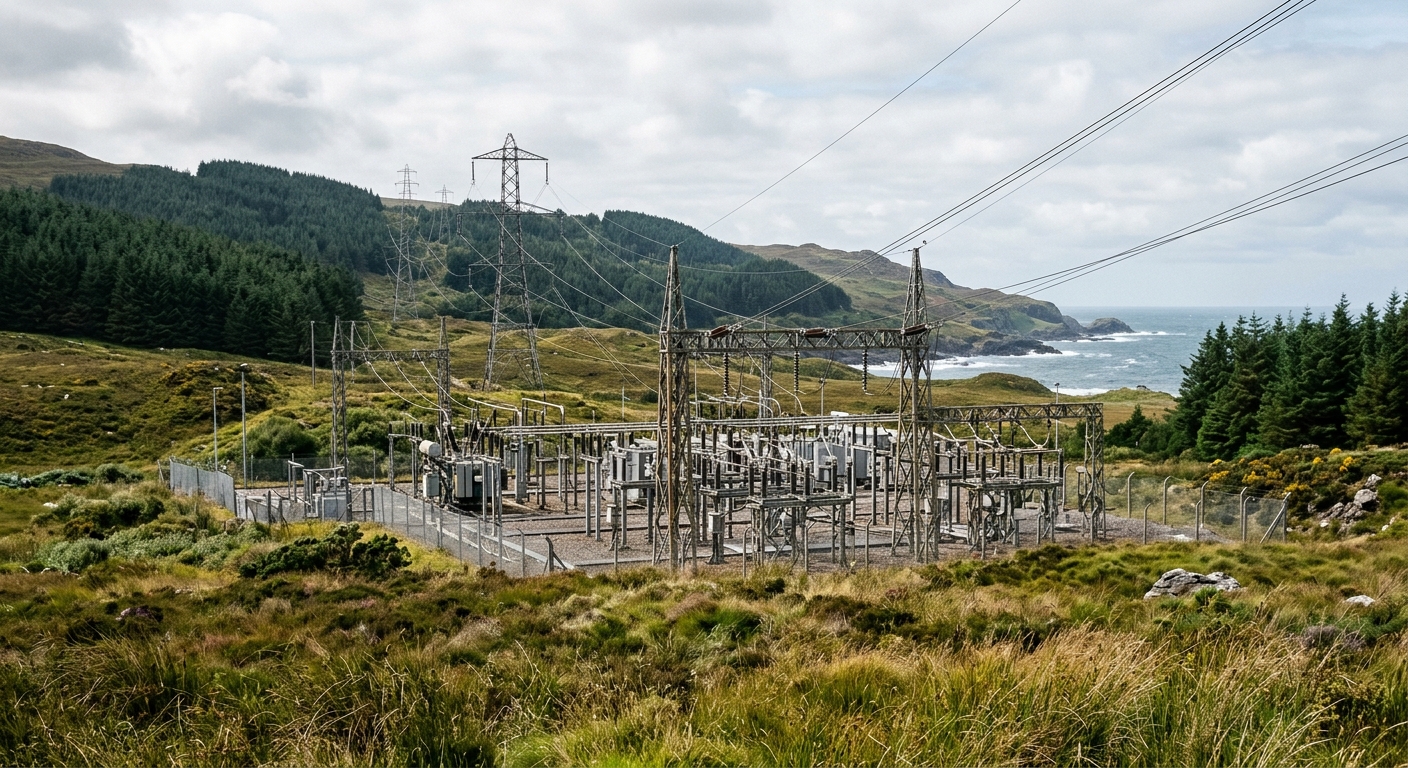
AI-generated illustration; not a photograph of the reported event.
- calendar_today November 13, 2026
Nova Scotia Power and EverWind Fuels Finalize Connection Agreements
Nova Scotia Power and EverWind Fuels, the proponent of an $8-billion data centre campus in Point Tupper, N.S., have formally signed a service contract and a letter agreement addressing the project's connection to the provincial electricity grid. These agreements specify both the conditions for electrical service and the financial responsibilities associated with necessary system upgrades.
Interruptible Service Protects Residential Customers
According to the terms of the service contract, the first phase of the data centre will operate on an interruptible load. This means Nova Scotia Power (or, in the future, the grid operator) may require EverWind to reduce its power consumption with as little as 10 minutes' notice, especially during periods when the grid is under strain. Interruptible loads are also used by other major industrial customers to help protect residential users. To support this arrangement, EverWind plans to install batteries and a diesel generator on site as backup power.
EverWind to Bear All New System Upgrade Costs
The letter agreement between EverWind Fuels and Nova Scotia Power explicitly states that all new system costs related to the data centre connection will be covered by EverWind. Preliminary estimates suggest upgrades to support the new facility could cost $74 million or more. This commitment is intended to prevent electricity rate increases for other customers, a key concern among Nova Scotia residents given the existing grid reliability issues and high household power rates.
Commitment to Preventing Rate Increases
Brendan Chard, EverWind’s vice-president of power, described the written agreements as a necessary step to assure the public that other ratepayers would not bear the costs associated with the data centre. The letter specifically notes EverWind's responsibility for “incremental costs, if any, to other customers that are reasonably attributable to the new load on the system,” with oversight on the tracking, determination, and payment of these costs by the Nova Scotia Energy Board.
Tariff Structure and Regulatory Oversight
The current tariff, or rate class, being applied is an existing one for large industrial customers, but it is considered interim until the Nova Scotia Energy Board completes its review. Jacquie Foster, spokesperson for Nova Scotia Power, clarified that this tariff was not designed for a customer of EverWind's magnitude and that a new tariff structure will need to be developed through consultation with various stakeholders, including the Independent Energy System Operator-NS and regulatory bodies. The timeline for establishing a new tariff has yet to be determined.
Industry Impacts and Regulatory Model
Chard noted that Nova Scotia’s “highly regulated” electricity market makes it easier to ensure all costs are tracked and shouldered by a single customer, such as the EverWind data centre. Nova Scotia Power works under a cost-of-service model, which is overseen by the Nova Scotia Energy Board. The board reviews the utility’s proposed rates and determines the final charges for various customer classes. In the most recent rate application, the board mandated a lower residential rate increase than initially requested by the utility.
Public Response and Potential Benefits
The data centre proposal has faced public scrutiny, with hundreds gathering in Halifax to protest. Despite concerns about the impact on provincial power rates, Scott Balfour, head of Nova Scotia Power's parent company Emera, stated that large customers can help support investments in the system and potentially distribute costs more broadly. The ultimate structure of the tariff for the data centre remains subject to board approval and further regulatory processes.
Related coverage
Source: cbc.ca.